Profit Margins Every Business Should Track

Do you know if your business is truly profitable? Revenue alone doesn’t paint the whole picture. To understand your financial health and identify areas for improvement, you need to track the right profit margins. These percentages reveal how much money your business retains after accounting for various costs. Ignoring them is like driving a car without a speedometer – you might be moving, but you have no idea how fast, or in what direction, you are heading. That’s why it is important to monitor and calculate profit margins for your business.
Key Takeaways:
- Understanding and tracking profit margins is crucial for assessing your business’s financial health.
- The three key profit margins to monitor are gross profit margins, operating profit margins, and net profit margins.
- Each margin provides a different perspective on profitability, from cost of goods sold to overall expenses.
- Regularly analyzing these margins helps identify areas for improvement and make informed business decisions.
Understanding Gross Profit Margins
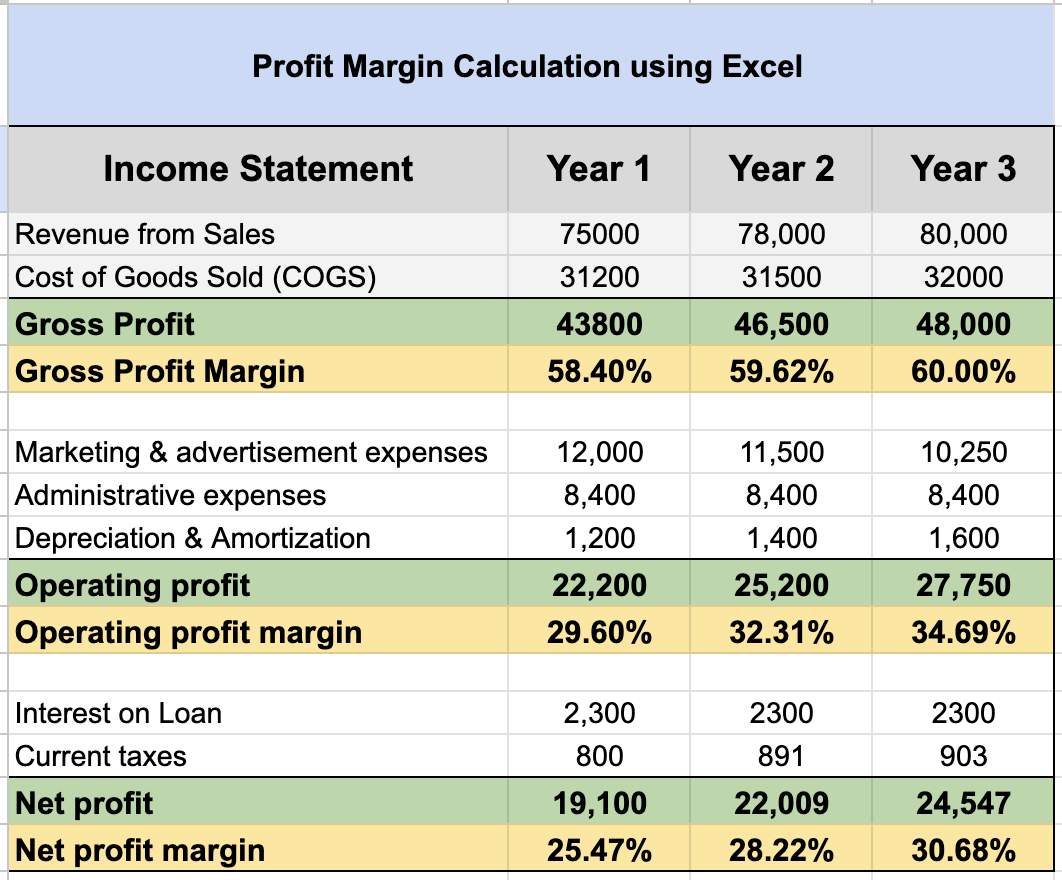
The gross profit margins is the most basic profitability measure. It reveals how efficiently a business converts revenue into gross profit. Gross profit is calculated by subtracting the cost of goods sold (COGS) from revenue. COGS includes direct costs associated with producing goods or services, such as raw materials, labor, and manufacturing overhead.
The formula for calculating gross profit margins is:
(Revenue – COGS) / Revenue x 100
A higher gross profit margins indicates that a business is efficient at managing its production costs. For example, a gross profit margins of 60% means that for every dollar of revenue, the business retains 60 cents after covering the direct costs of production. Monitoring your gross profit margins over time allows you to identify potential problems, such as increasing material costs or inefficient production processes. It also allows us to benchmark against your competitors in the industry. A declining gross profit margins might signal the need to renegotiate supplier contracts, improve production efficiency, or adjust pricing strategies.
Deciphering Operating Profit Margins
Operating profit margins takes the analysis a step further by factoring in operating expenses. Operating expenses include costs like salaries, rent, marketing, and administrative expenses. It represents the profit a business makes from its core operations, before considering interest and taxes.
The formula for calculating operating profit margins is:
(Operating Income / Revenue) x 100
Where operating income is calculated as:
Gross Profit – Operating Expenses
A higher operating profit margins signifies that a business is efficiently managing its operational costs. This margin provides insights into the effectiveness of management decisions and the overall operational efficiency of the business. A healthy operating profit margins suggests that the company can cover its operational expenses and still generate a significant profit from its core business activities. Using it together with your gross profit margin will tell you where your expenses are costing too much.
Net Profit Margins and Its Significance
The net profit margins is the bottom line – it represents the percentage of revenue that remains after all expenses, including interest, taxes, and other deductions, have been paid. This is the true measure of profitability, showing how much money a business actually earns for every dollar of revenue.
The formula for calculating net profit margins is:
(Net Income / Revenue) x 100
Where net income is calculated as:
Revenue – All Expenses (Including COGS, Operating Expenses, Interest, and Taxes)
A strong net profit margins indicates a healthy and profitable business. It demonstrates that the company is effectively managing all its costs, including production, operations, and financial obligations. A higher net profit margins means more money is available for reinvestment, debt repayment, or distribution to shareholders. Comparing your net profit margins to industry averages can help you assess your business’s performance relative to its competitors.
Analyzing and Improving Profit Margins
Tracking profit margins isn’t just about calculating numbers; it’s about understanding the underlying drivers of profitability and identifying areas for improvement. Regular analysis allows you to spot trends, identify inefficiencies, and make data-driven decisions to improve your bottom line. Look for patterns and variances in your profit margins over time. Investigate the reasons behind any significant fluctuations. Are your costs increasing? Is your pricing competitive?
Once you’ve identified areas for improvement, take action. This might involve:
- Negotiating better deals with suppliers to reduce COGS.
- Streamlining production processes to improve efficiency.
- Reducing operating expenses through cost-cutting measures.
- Adjusting pricing strategies to optimize revenue and profit margins.
By continuously monitoring and analyzing your profit margins, you can gain a clear understanding of your business’s financial health and make informed decisions to drive profitability and achieve sustainable growth.